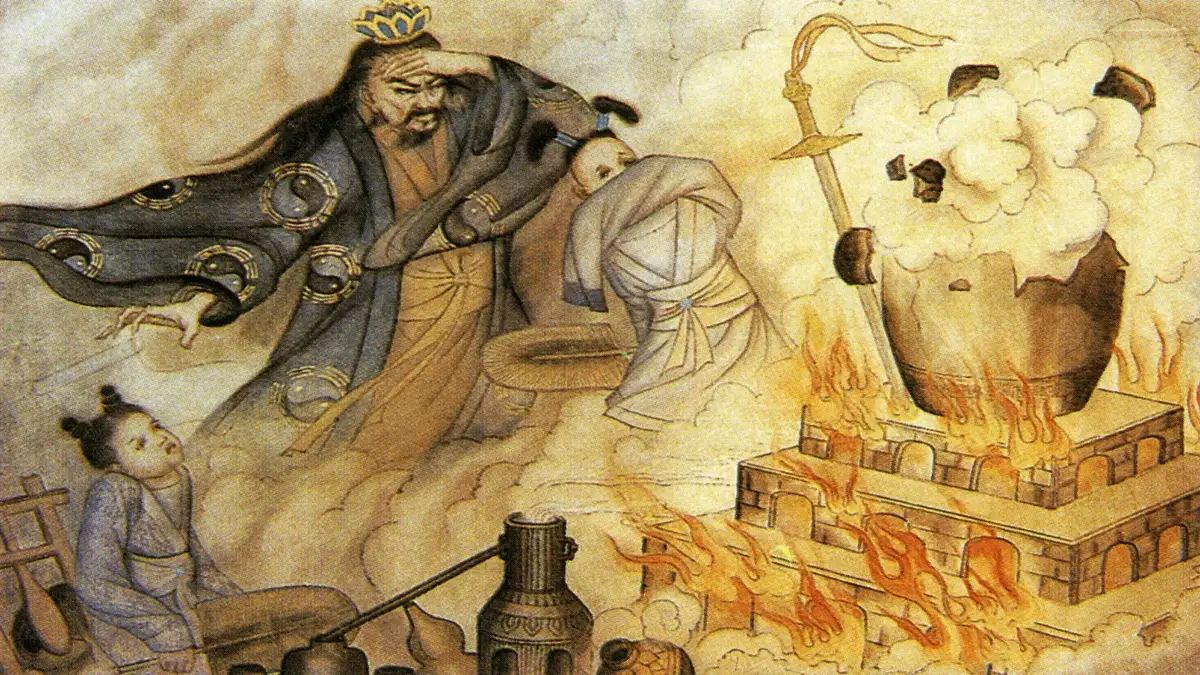

The autochthonous culture of the Koreans began to take shape five thousand years ago, during the transition from the civilization of the gods to the civilizations of humans. Ancient empires emerged, of which no written records have survived. According to the author, the entire history of nations is embedded in their language. Decoding this cultural treasure is difficult, but the process of this linguistic journey yields fruits no less significant than the age of great geographical discoveries.
This two-volume work captures the vast temporal and spatial scope of the history of Earth’s civilizations five thousand years ago, reconstructing it from the myths of the Slavic, Greek, Indian, Chinese, and Korean peoples. Concepts of evolutionary and involutionary processes shed light on numerous anomalies in human history.
The first book, Kosil, tells the story of the youth of a legendary hero who taught people to cultivate the land, raise livestock, and cook. To this day, Koreans still offer a portion of their food to this deity before working in the fields.
The second book, Dangun, tells the story of the progenitor of the Korean people and the grandson of Hwanin (Indra), the supreme deity of Eastern peoples. Dangun founded Gojoseon, a powerful ancient state that rivaled China.
The novel was released in two formats:
- A two-volume print edition.
- A digital PDF edition.
Print edition:
- Author: Anatoly Tsoy.
- Language: Russian.
- Publisher: A. Bogatykh & E. Rakitskaya Publishing Partnership.
- ISBN 978-5-98575-497-1, 978-5-98575-498-8; 2010 year.
Additional specifications:
- Pages: 888.
- Format: 60×84/16 (145×200 mm).
- Print run: 1,000 copies.
- Binding: Dust jacket.
- Weight: 500 g.
- Dimensions: 210 × 148 mm.